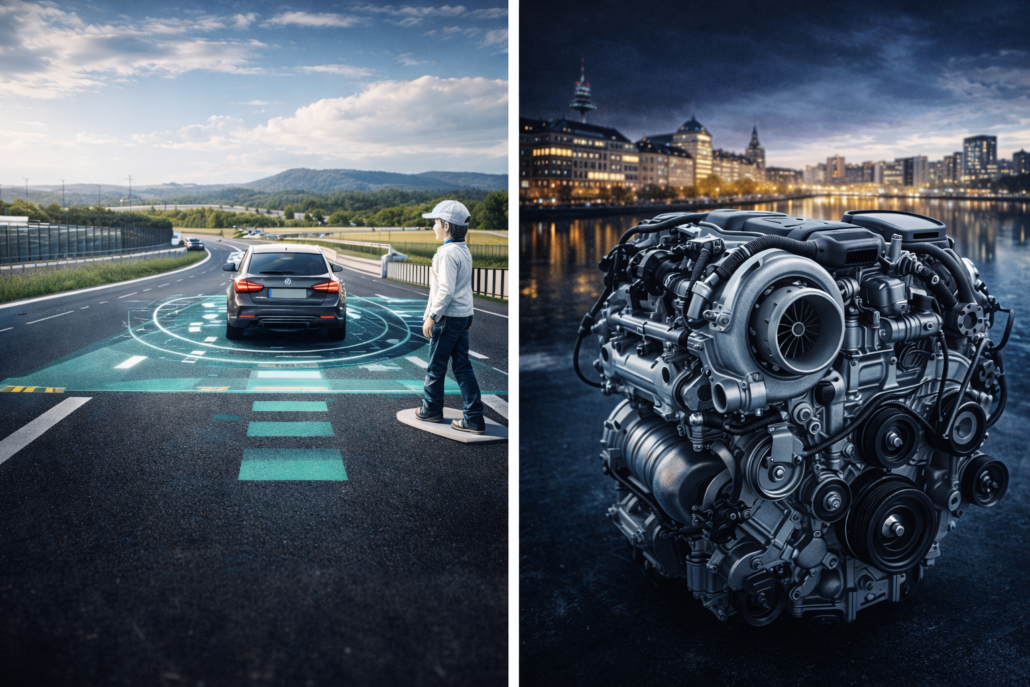
Passive Safety in the ADAS Era

From the promise of accident avoidance to the reality of impact

Over the past decade, public discourse on automotive safety has shifted almost entirely toward ADAS systems. Automatic emergency braking, lane keeping assistance, and steering interventions are often presented as signs of steady progress toward increasingly rare accidents.

This shift in focus has pushed passive safety into the background, even though engineering reality points in the opposite direction: as ADAS becomes ubiquitous, the importance of the vehicle structure, restraint systems, and airbags increases rather than diminishes.

ADAS reduces risk, it does not eliminate accidents

ADAS systems are designed for prevention. They can reduce the likelihood of an accident, mitigate an incorrect maneuver, or gain a few critical fractions of a second. However, they cannot completely eliminate accidents.

When prevention fails, the physics of the impact becomes the decisive factor. Kinetic energy must be dissipated, and the way in which the vehicle structure deforms in a controlled manner directly influences the severity of occupant injuries.

At this point, passive safety remains the final and most important level of protection.

Vehicle structure in an increasingly complex architecture

The integration of ADAS fundamentally changes vehicle architecture. Radar sensors, cameras, control units, and wiring are placed in areas that were traditionally dedicated to energy absorption during a crash.

This overlap creates a real engineering challenge: the structure must deform in a controlled way while simultaneously protecting critical electronic components. An incorrect compromise can affect both ADAS performance and structural behavior in a collision.

Airbags are not a “finished” technology

Public perception often treats airbags as a mature solution that has remained unchanged for years. In reality, they continue to evolve.

Modern airbags are becoming adaptive, with deployment strategies adjusted according to impact severity, occupant position, and pre-crash data provided by ADAS systems. Integrating information from the moments before a collision allows for more precise calibration of the protection sequence.

Passive safety is not static. It is becoming increasingly data-dependent.

Why physical testing remains indispensable
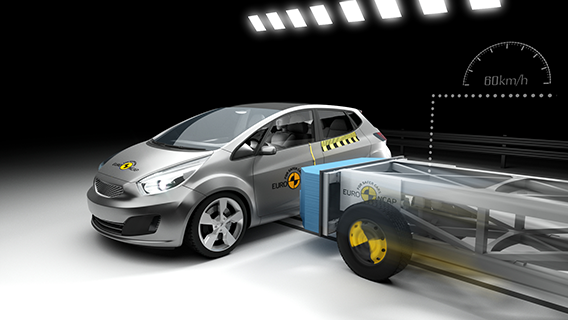
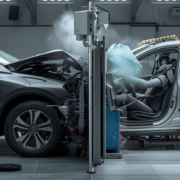
Physical testing remains the only method through which these cumulative effects can be fully validated. Only real-world impact tests can confirm whether the structure deforms as intended, whether load paths are correctly managed, and whether restraint systems operate in synchronization with occupant dynamics. The interaction between seat belts, airbags, seats, and the vehicle structure is extremely sensitive to details that digital models can approximate but cannot fully reproduce.

In the context of ADAS, the importance of physical testing increases further. Active safety systems can modify pre-impact conditions, residual speed, collision angle, or occupant position in the fractions of a second before impact. These variations directly influence how passive safety systems must respond. Validating this complete chain, from pre-impact to energy dissipation and occupant protection, cannot be achieved through digital simulation alone.

Thus, physical testing is not a tool of the past but a critical reality check. In the ADAS era, it does not disappear; it evolves into a more integrated, more frequent process, closely linked to development, ensuring that digital progress does not compromise real-world protection at the moment of impact.

Regulations, assessments, and their limits

The technical regulatory framework remains mandatory regardless of the level of digital assistance. UNECE regulations define minimum safety requirements, while Euro NCAP assessments provide a comparative view of vehicle performance.

It is important to emphasize that these assessments do not replace homologation; they complement it. A high score does not override fundamental structural requirements, nor does it substitute conformity testing.

Modern laboratories: more than testing facilities

Safety laboratories are no longer simple locations where tests are performed at the end of development. They are becoming integration hubs between design, validation, and homologation.

This evolution is driven by time pressure, increasing vehicle complexity, and the need for rapid validation cycles.

Eastern Europe’s missed opportunity

Eastern Europe currently holds a solid position in the European automotive production chain. The region hosts assembly plants, structural component factories, restraint system production, wiring harnesses, electronic components, and engineering centers primarily focused on industrial support. Despite this, its role in validation, advanced testing, and homologation remains marginal.

This separation is not accidental. Passive safety testing infrastructure requires significant investment, long-term know-how, and close interaction with regulatory authorities. Traditionally, these capabilities have been concentrated in Western Europe, where historical decision-making, development, and homologation centers were established. Eastern Europe has been viewed mainly as a cost-efficient production region rather than a validation hub.

The problem is that this logic is becoming inefficient. Modern vehicles are far more complex, development cycles are shorter, and the integration of ADAS with structural and passive safety systems requires rapid iterations between design, testing, and correction. Geographic distance between factories, engineering centers, and testing laboratories slows processes and increases logistical costs.

In practice, many critical components produced in Eastern Europe are tested and validated hundreds or even thousands of kilometers away. Any non-conformity discovered late leads to delays, redesigns, and additional costs. In this context, the absence of regional testing centers is no longer merely an issue of industrial status but one of economic efficiency and competitiveness.

The growing prevalence of ADAS further amplifies this need. Active safety systems influence impact conditions, and proper validation requires integrated, not sequential, testing. Without local impact testing infrastructure, structural testing, and restraint system evaluation, Eastern Europe remains dependent on external decisions and capabilities, despite its direct contribution to the final product.

What currently appears to be a missed opportunity thus becomes, in the medium term, a strategic risk. Developing regional testing and validation centers would not represent unnecessary duplication but an adaptation to the reality of a faster, more complex, and more integrated industry. Without this step, Eastern Europe risks remaining locked into an incomplete role, essential for production yet underutilized in terms of added value and advanced technical competence.

Conclusion

ADAS changes how we attempt to avoid accidents. Passive safety defines what happens when they occur. Between the two lie testing, infrastructure, and engineering competence.

Real progress does not come from replacing passive safety with digital solutions, but from integrating them coherently into a system that respects the limits of physics and the reality of impact.

Disclaimer

The opinions expressed in this article belong to the founder of CarIntellect and reflect a professional analysis based on experience and information available at the time of writing. They do not represent official positions of institutions, organizations, or entities within the automotive industry and should not be interpreted as statements of conformity, homologation, or commercial recommendations.

Lane Assist: what it is, how it works, and why it does not “lock the steering wheel”

Lane keeping assistance systems have become, in recent years, a frequent topic in public debate. On the one hand, they are presented as an important advance in road safety. On the other hand, alarmist reports periodically appear, associating them with loss of control or serious accidents.

In reality, the gap between how the system works from a technical perspective and how it is perceived by the driver is at the core of most of these controversies.

What Lane Assist actually is

Lane Assist, also known as Lane Keeping Assist, is an ADAS system designed to reduce the risk of unintentional lane departure. It is not an autonomous driving system and it is not intended to “keep the car on the road” in the absence of the driver.

Its function is limited to:

  • detecting deviation from the driving lane,
  • applying a mild steering or braking correction,
  • warning the driver, depending on system configuration.

Responsibility for steering remains, at all times, with the driver.

How Lane Assist works, step by step

Despite common perceptions, the system operates in a relatively straightforward way and is based on three distinct stages.

1. Detection

A forward-facing camera, usually mounted near the interior rear-view mirror, identifies road markings. The system does not “see the road” like a human driver. Instead, it analyzes specific visual contrasts, such as solid or dashed lines and lane edges.

2. Interpretation

Based on the captured images, the software estimates the vehicle’s position and the probability of an unintentional lane departure. Several variables are correlated, including vehicle speed, steering wheel angle, turn signal activation, and the presence of continuous driver input.

3. Intervention

When predefined conditions are met, the system may:

  • apply a small steering torque via the electric power steering,
  • selectively brake one of the wheels,
  • or issue visual or audible warnings only.

The applied torque is strictly limited by design and can be immediately overridden by the driver.

Since when has Lane Assist existed?

The first lane departure warning systems appeared in the early 2000s. Active steering correction entered series production around 2004. Between 2010 and 2018, the technology rapidly expanded into mid-range vehicle segments, and after 2018 it became an integral part of European safety assessment protocols.

Today, Lane Assist is standard equipment on most new vehicles sold in the European Union.

“The steering wheel locked”: what technical analysis shows

The claim that Lane Assist can lock the steering wheel is not technically supported. Electric power steering systems:

  • do not contain mechanical locking mechanisms,
  • operate exclusively by applying controlled torque,
  • are designed so that the driver always has absolute priority.

In situations reported as “lock-ups,” the typical sequence is the following: the driver initiates a maneuver without signaling, the system interprets the deviation as unintentional, and applies an opposing correction. The resulting resistance is perceived as unexpected feedback, not as a mechanical failure.

Factors that can create confusion

Post-accident analyses often reveal factors overlooked in media reports: worn or temporary road markings, poorly marked roadworks, wet or dirty pavement, missing signage, or system use outside its recommended operating conditions.

Under such circumstances, Lane Assist may reduce its intervention or temporarily deactivate.

Myths and reality

The idea that Lane Assist “takes control” is one of the most persistent misconceptions. The system applies only limited corrections and only in the absence of clear driver input. It is not autonomous, does not anticipate intentions, and does not replace human attention.

A human–machine interface issue

From an engineering standpoint, Lane Assist is functionally correct, yet not always intuitive. Steering resistance is intentional, but it is not always clearly explained or understood by drivers. The difference between “helpful” and “intrusive” can arise in fractions of a second and is more closely related to user expectations than to technical limitations.

Conclusion

Lane Assist is neither experimental nor infallible. It is a mature system, well understood from an engineering perspective, designed to intervene selectively in well-defined situations rather than to manage the full complexity of real-world traffic. It performs correctly when infrastructure is legible, road markings are clear, and the driver uses it within its intended parameters.

Problems arise when user expectations exceed the system’s purpose. Lane Assist does not know the driver’s intentions and cannot interpret context in a human way. It reacts strictly to detected deviations and the absence of clear input. In such moments, its correction may feel like resistance, especially when the driver does not anticipate the intervention.

Incidents in which the system is cited as a triggering factor rarely point to a design flaw or a loss of mechanical control. They more often highlight the limits of human–machine interaction, particularly in real-world driving conditions where markings are incomplete, temporary, or contradictory.

Lane Assist reduces certain types of errors, but it does not eliminate them. It does not replace attention, compensate for poor decisions, or correct a lack of anticipation. Like any ADAS feature, it is effective only when properly understood, accepted as limited assistance, and used consciously.

The uncomfortable truth is this: the technology operates according to specifications, but it cannot correct user misunderstanding. And where understanding is missing, even the most carefully calibrated algorithm cannot prevent incorrect reactions behind the wheel.

Disclaimer

This article is intended for informational and technical purposes only. The analysis is based on engineering principles, declared ADAS system functionality, and publicly available data. It does not constitute legal advice, accident expertise, or an assessment of any specific case. The performance of driver assistance systems varies depending on manufacturer, configuration, technical condition, road environment, and usage. Responsibility for vehicle operation remains with the driver at all times.

Zoox Opens Its Robotaxi Service to the Public in Las Vegas

What This Step Means for the Autonomous Vehicle Industry

The launch of Zoox’s public robotaxi service in Las Vegas marks one of the most tangible moments for autonomous mobility in recent years. This is no longer about isolated tests, but about real public access within a controlled operational framework. Although the service area is limited and rides are currently free, the impact goes far beyond a local rollout. It touches on technology, regulation, public trust, and how companies validate autonomous transport models in real-world conditions.

What Zoox Has Actually Launched

Zoox, owned by Amazon, now allows members of the public to request an autonomous ride within a defined area of the Las Vegas Strip. This represents a transition from closed testing environments to public accessibility, with geo-fenced routes connecting hotels and entertainment venues.

The vehicle itself is purpose-built for autonomous driving. It has no steering wheel, pedals, or traditional driver position. The interior is symmetrical, with four seats facing each other. Zoox is not adapting an existing production car; it is building a robotaxi in the strict sense of the term.

Why Las Vegas

Las Vegas remains one of the preferred cities for technology launches. Predictable weather, clearly structured infrastructure, and a high concentration of users within a compact area provide an ideal environment for public testing. The Strip offers repetitive routes, moderate speeds, and a constant flow of tourists who are generally open to trying new experiences.

For a robotaxi service, predictability and user density are genuine advantages.

Why the Rides Are Free

The lack of a fare is not a promotional campaign, but a necessary phase. Zoox needs:

  • real-world traffic data in scenarios difficult to replicate in internal testing
  • observations on user behaviour
  • feedback on the in-vehicle experience
  • time to complete all authorizations required for commercial operation

In Nevada, no pricing model has yet been announced, and in California the company does not currently hold all approvals required for paid rides. This intermediate phase allows Zoox to collect the data needed for technological validation.

How Zoox Differentiates Itself

The closest comparable competitor is Waymo, but the difference in approach is significant:

  • Waymo modifies existing production vehicles.
  • Zoox builds a dedicated autonomous vehicle.

Zoox’s approach allows full freedom in sensor placement, electrical architecture, safety redundancies, and vehicle dynamics, including symmetric manoeuvring and bidirectional driving. The challenge lies in cost and scalability: producing a dedicated robotaxi is more expensive and harder to scale than adapting mass-produced vehicles.

Current Limitations

The launch is important, but remains within a tightly controlled framework:

  • operation limited to a small area
  • rides offered free of charge
  • a still limited fleet size
  • regulatory frameworks still evolving
  • wide variation in public trust
  • increased scrutiny from authorities

This is an early market phase, not a mature one.

Why This Step Matters

Even with its current limitations, the launch has tangible significance:

  • it demonstrates that robotaxis can transport ordinary passengers
  • it provides regulators with real operational data
  • it turns the robotaxi concept into an accessible service
  • it establishes a cooperation model between operator and city
  • it accelerates competition in autonomous mobility

What to Watch in 2025–2026

Zoox plans to expand public testing in San Francisco and has announced intentions to enter Austin and Miami. Each city will expose the technology to different traffic patterns and climatic conditions.

Key elements to monitor include:

  • the introduction of pricing
  • the pace of fleet expansion
  • the extension of operational maps
  • regulatory responses
  • competitor reactions

More information is available at: https://zoox.com/

Conclusion

The Zoox launch in Las Vegas will not transform urban mobility overnight, but it marks an important threshold: the robotaxi becomes a service that the public can actually access. The next two years will be decisive. If Zoox succeeds in moving from controlled demonstration to large-scale commercial operation, the industry will enter a fundamentally new phase.

Disclaimer

Disclaimer

This material is an analytical editorial based on publicly available information at the time of writing. CarIntellect does not represent Zoox, Amazon, or any other companies mentioned and does not provide commercial evaluations of their activities. The content is intended for informational purposes only and does not constitute technical, financial, or legal advice. The interpretations reflect CarIntellect’s editorial perspective on developments in autonomous mobility.

Image Disclaimer

The images used in this article are digitally generated and serve illustrative purposes only. They do not depict actual Zoox vehicles and are not official images released by the company.

The European Automotive Industry at a Crossroads

Between Electrification and Economic Realism

The transition toward fully electric mobility is becoming increasingly complex. Leaders from Stellantis and Mercedes-Benz have warned that a rigid implementation of the 2035 ban on the sale of internal combustion engine vehicles could trigger a severe recession within the European automotive industry. The debate reopens a fundamental question: how can the balance between climate objectives and the economic sustainability of the sector be maintained?

Context of the Debate

According to the Financial Times, leaders of major European automotive groups are calling for a review of the full electrification timeline. Their argument is that markets and production chains cannot sustain a complete transition by 2035 at the current pace without major social and economic costs.

Industry estimates point to a potential decline of up to three million vehicles per year if EU regulations remain unchanged.

At present, the European legal framework maintains its core objective: a 100% reduction in CO₂ emissions for new passenger cars, effectively allowing only zero-emission vehicles from 2035 onward.

What Manufacturers Are Calling For

  • Technological neutrality – recognition of the role of intermediate technologies, such as hybrids, e-fuels, and low-emission combustion engines, in ensuring a balanced transition.
  • Flexible phasing – staged achievement of the 2025–2030 targets to avoid penalties and market destabilization.
  • Avoidance of industrial shocks – protection of jobs and supply chains, particularly in Central and Eastern Europe.

The Position of the European Commission

The European Commission maintains the 2035 target as a non-negotiable commitment, while exploring mechanisms to adjust intermediate milestones. These include:

  • “compliance windows” for manufacturers,
  • support schemes for factory conversion,
  • additional funding for charging infrastructure and logistics chain digitalization.

Nevertheless, Brussels emphasizes that postponing the transition is not an option.

Economic and Geopolitical Implications

  • Global competitiveness: Chinese electric vehicle manufacturers are entering the European market aggressively, offering price and technology levels that are difficult to match.
  • Strained supply chains: semiconductor shortages and high energy costs continue to erode European OEM margins.
  • Social pressure: the reduction of conventional production capacity could affect tens of thousands of jobs, particularly in Eastern Europe.

Romania and Eastern Europe: Between Opportunity and Risk

Romania has a strategic window to attract investment in electric vehicle components and ADAS systems. To capitalize on this opportunity, several conditions are essential:

  • stable industrial policies and clear fiscal incentives;
  • charging infrastructure connected to European networks;
  • OEM–university partnerships to develop digital and technical skills.

Without these elements, the region risks becoming merely a consumption market for Asian imports rather than an active participant in the European value chain.

Possible Scenarios for 2026–2030

Scenario A – Fixed Target, Flexible Transition

The 2035 target remains in place, but implementation of intermediate steps is adapted. This is the most realistic scenario, preserving environmental direction without destabilizing the market.

Scenario B – Structural Relaxation

A potential reconsideration of the 2035 ban in the event of a prolonged recession. An unlikely scenario, but possible if economic impact becomes critical.

Scenario C – Rigid Status Quo

Strict enforcement of current rules without flexibility. This could accelerate Europe’s loss of market share in favor of Asia.

The CarIntellect Perspective

Europe is at the most sensitive point of its industrial transition.
The shift toward full electric mobility is inevitable, but the approach must be pragmatic rather than dogmatic. The risks are real—job losses, economic imbalances, and intense global competition—but they can be transformed into opportunities through coordination between industry, governments, and research centers.

For Romania, the challenge is clear: not merely to adapt, but to anticipate. A predictable framework, robust infrastructure, and an intelligent industrial strategy can turn this transition into a regional competitive advantage rather than a vulnerability.

Disclaimer

This article is the result of independent research, technical experience, and individual studies conducted by the CarIntellect founder, Eng. George-Adrian Dincă. The content is provided exclusively for informational and educational purposes and does not represent the position of any institution, company, or legal entity. All data and interpretations are based on publicly available technical sources and observations from professional practice, aiming to support a correct understanding of technological progress within the automotive industry.

Regaining Trust in ADAS: Between Errors, Alerts, and the Autonomy of the Future

Context

Driver trust in Advanced Driver Assistance Systems (ADAS) is declining as intrusive alerts, minor malfunctions, and unrealistic expectations turn innovation into frustration. A study published by Springer Professional confirms that “malfunctions undermine trust in ADAS,” while negative perceptions slow the transition toward higher levels of automation.

For Romania and Eastern Europe, the key is not technology alone, but better design, rigorous validation, and honest communication at the time of delivery and throughout maintenance.

1. Why Drivers Lose Trust

Assistance systems are not autonomous, yet many drivers perceive them as such.
When ADAS behaves unpredictably—unstable lane centering, delayed reactions to cut-ins, frequent context-free warnings—users often deactivate the systems entirely.

Studies by AAA and J.D. Power show that excessive alerts are the primary source of frustration, followed by “robotic” behaviour in real traffic. The result is paradoxical: features designed to increase safety are switched off, and their benefits are lost.

2. What Independent Data Shows

Euro NCAP Assisted Driving Gradings reveal significant differences between systems, particularly in perception, lateral control, and human–machine interface. Post-incident costs have increased substantially due to the recalibration of radar and lidar sensors.

Studies conducted in Italy and Germany point to the same phenomenon: insufficient user information amplifies distrust, even when the system itself functions correctly.

3. Romania and Eastern Europe: Local Specificities

  • Variable road markings and infrastructure, which challenge lane-keeping systems.
  • Minimal delivery education—customers receive, at best, a brief overview of features.
  • High cost sensitivity—a simple ADAS recalibration after a minor incident can exceed the psychological trust threshold of the customer.

4. How Trust in ADAS Can Be Rebuilt

A. For Manufacturers and Importers

  • Honest promises—clearly defining real system limits.
  • Less intrusive UX—reducing alarm fatigue through adaptive alerts.
  • Standardized delivery demonstrations—15–20 minutes of real-world testing with the customer.
  • Full transparency on costs and recalibration procedures.
  • Displaying the Euro NCAP Assisted Driving score for each model.

B. For Dealers and Fleets

  • Delivery training based on real traffic scenarios.
  • Follow-up after 30 days to adjust settings.
  • An ADAS quick-reference card with clear icons and concise explanations.
  • Recalibration budgets included in TCO and partnerships with certified service centers.

C. For Service Providers and Insurers

  • Post-calibration photo and data logs shared with the customer.
  • Insurance policies explicitly covering ADAS sensors.
  • Clear commitments on recalibration time and transparent cost estimates.

5. What Needs Technical Improvement

  • Robustness on imperfect roads—extended validation under real Eastern European conditions.
  • Intuitive interfaces—clear feedback explaining why alerts occur.
  • OTA updates with explanatory release notes detailing system changes.
  • Internal performance reporting—tracking deactivation rates and nuisance alerts.

6. The CarIntellect 3×3 Method for Trust

Three transparencies: what the system can and cannot do, when it deactivates, and how much recalibration costs.

Conclusion

Trust in ADAS is not rebuilt through glossy brochures or technical claims, but through a coherent chain of real experiences that drivers live through—in the car, in the service center, and in their relationship with the dealer.

Marketing may spark curiosity or initial enthusiasm. Trust emerges only when:

  • the system delivers what it promises in real situations,
  • it acknowledges its limits through a clear interface, and
  • the user feels supported rather than left alone with errors and costs.

For the Romanian market, ADAS success rests on three pillars:

Local Calibration

Systems designed and validated solely on “textbook” highways will fail when confronted with faded markings, potholes, and secondary roads typical of Eastern Europe. This requires:

  • systematic testing on real regional roads,
  • validation scenarios including missing markings, roadworks, and aggressive cut-ins,
  • structured local user feedback integrated into software updates.

When a vehicle behaves predictably and plausibly in local conditions, trust grows. When it fails precisely as conditions become challenging, ADAS becomes the scapegoat rather than a safety partner.

User Education Beyond “Handing Over the Keys”

Many drivers leave the showroom with a simplified message: “the car drives itself.” Any subsequent error is perceived as betrayal. Real education means:

  • explaining the difference between assistance and automation,
  • concrete examples: where the system assists, where it only warns, and where immediate intervention is required,
  • revisiting settings after the first 30 days, once drivers have real experience and clear questions.

A driver who understands the system develops fewer unrealistic expectations and tolerates limitations better.

A Service Network Ready for Predictive Maintenance

A sophisticated system that is difficult to maintain quickly becomes a source of suspicion. If, after a minor incident, the owner hears only “the entire sensor must be replaced, it’s expensive and takes time,” trust collapses.

A mature service network implies:

  • clear calibration and recalibration procedures,
  • predictable intervention times explained upfront,
  • transparent reporting to the customer: what was done, what was checked, and which risks were mitigated.

Over time, these elements build positive memory: “when there was a problem, I understood what happened, received proof the system works, and wasn’t left in the dark.”

Ultimately, ADAS does not need to be perfect to be accepted—but it must be coherent, well explained, and properly supported. When technology is calibrated to real roads, users are treated as partners, and service acts as a guarantor rather than an added risk, ADAS stops being “beep-beep-oops” and becomes what it was meant to be from the start: a discreet, reliable ally on the road toward automation.

Disclaimer

This article reflects independent research, technical experience, and individual studies conducted by the CarIntellect founder, Eng. George-Adrian Dincă. The content is provided exclusively for informational and educational purposes and does not represent the position of any institution, company, or legal entity. All data and interpretations are based on publicly available technical sources and observations from professional practice, aiming to support a correct understanding of technological progress in the automotive industry.

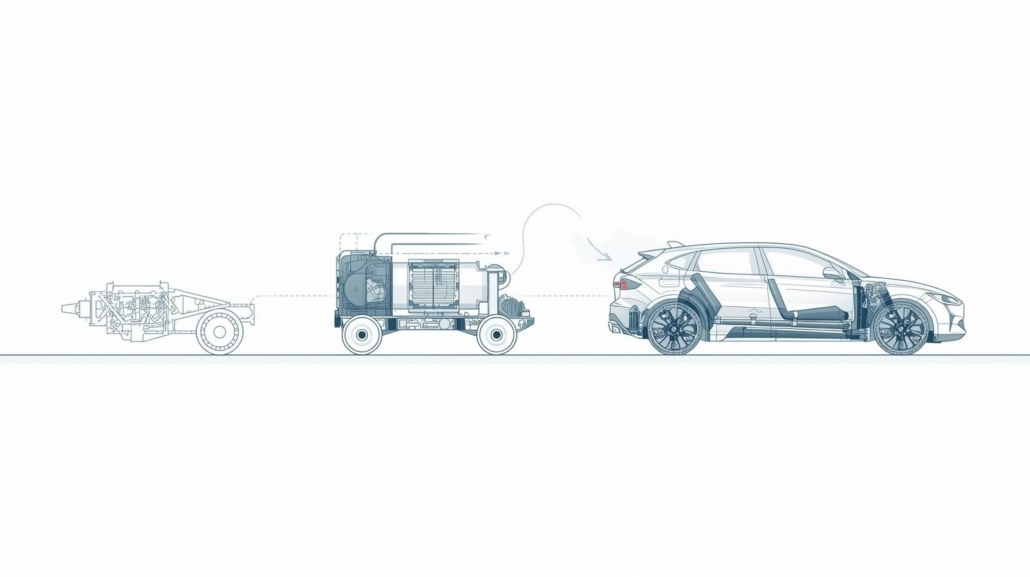
Hydrogen in Vehicles: From an Old Idea to Today’s Functional Technologies

Interest in hydrogen as a transport energy carrier is not new. It dates back to the nineteenth century, reappears cyclically during periods of energy crisis, and has now reached a stage where electrochemical conversion enables real-world use, particularly in heavy transport. This evolution has not been linear. It has been marked by episodes of enthusiasm, stagnation, and renewed interest, closely linked to progress in materials, storage, and energy conversion.

1. The Origins of the Idea: 19th Century – Early 20th Century

The earliest experiments involving hydrogen in transport emerged from two distinct technical directions:

  • the development of electrolysis, enabling controlled hydrogen production
  • the emergence of internal combustion engines, theoretically compatible with gaseous fuels

Between 1830 and 1900, isolated demonstrations of low-power engines running on locally produced hydrogen took place. The major limitation of the era, however, was storage. Tanks could withstand only low pressures, and compression technologies were rudimentary. This effectively blocked any practical transport application.

At the beginning of the twentieth century, more mature engineering analyses appeared. Hydrogen–air mixtures were shown to burn rapidly, operate with very lean mixtures, and potentially increase theoretical efficiency. Nevertheless, the lack of safe storage solutions and high costs kept the automotive industry dependent on liquid fuels.

2. Renewed Interest: 1970s–1990s

The 1973 oil crisis forced industrialized economies to seek alternatives. Hydrogen returned to the strategic agenda, and major manufacturers launched experimental programs.

Notable examples include:

  • BMW testing engines powered by liquid hydrogen
  • U.S. companies exploring dual-fuel solutions
  • research institutes studying lean combustion, knock, and mixture stability

The conclusion was clear: internal combustion engines can operate on hydrogen, but overall efficiency remains inferior to solutions that convert chemical energy directly into electricity. This marked the beginning of a paradigm shift.

3. The Transition to Electrochemical Conversion

During the 1990s and early 2000s, research focus shifted toward fuel cells. The reason was straightforward: reduced mechanical losses and higher efficiency.

3.1. PEM Fuel Cells

Proton exchange membrane (PEM) fuel cells operate at 60–80 °C, start quickly, and offer power density compatible with automotive applications. Toyota, Honda, and Hyundai invested heavily in this technology, which became the standard for series-production hydrogen vehicles.

3.2. Solid Oxide Fuel Cells (SOFC)

Initially developed for stationary applications at temperatures of 700–900 °C, SOFCs became relevant for transport only when materials allowed operating temperatures to drop toward 500 °C or below. Lower temperatures reduce mechanical stress, warm-up time, and thermal insulation complexity.

3.3. Hybrid Architectures

The hydrogen fuel cell does not replace the battery. The battery manages peak loads and regenerative braking, while the fuel cell provides continuous power. This architecture has become the technical standard for hydrogen-powered vehicles.

4. The First Commercial Vehicles: 2010–2020

During this period, the first limited-series production models appeared:

  • Toyota Mirai
  • Hyundai Nexo
  • Honda Clarity Fuel Cell

All use PEM fuel cells. In parallel, hydrogen-powered trucks and buses were developed and tested on dedicated logistics corridors.

Adoption remained limited for three main reasons: fuel cell costs, lack of infrastructure, and the difficulty of producing green hydrogen at industrial scale.

5. Why Hydrogen Is Back in Focus Today

Current interest is not circumstantial. It is supported by tangible technical developments.

5.1. Lower Operating Temperatures for SOFCs

Advanced materials and microstructures now enable operation below 500 °C. For large vehicles, this reduces system complexity and increases durability.

5.2. Lower Costs for Electrolysers and Renewable Energy

As solar and wind energy become more affordable, the cost of green hydrogen decreases, improving economic viability.

5.3. The Limits of Heavy Electric Vehicles

High-capacity batteries are heavy, costly, and require long charging times. Hydrogen allows rapid refuelling and long range without significant mass penalties.

6. Areas Where Hydrogen May Become Relevant This Decade

Heavy Transport

Fixed routes, controlled fleets, and intensive logistics, where range and refuelling time are critical.

Urban Distribution

Hybrid fuel cell–battery commercial vehicles, offering consistent range and operational flexibility.

Industrial Vehicles

Ports, mines, and logistics platforms, where hydrogen can be produced and used locally.

Passenger Cars

Unlikely in the short term. Infrastructure costs and battery maturity limit applicability.

7. Challenges That Remain

  • insufficient production of green hydrogen
  • fuel cell material costs
  • slow infrastructure standardization
  • high-pressure storage tanks and safety requirements
  • auxiliary system losses

These limitations explain the cautious pace of adoption.

Conclusion

Hydrogen has gone through multiple phases: combustion in conventional engines, renewed interest during energy crises, transition to fuel cells, and today’s evolution toward hybrid systems for heavy transport. The technology is more mature than ever, but it is not universal.

Most likely, hydrogen will not replace batteries. Instead, it will occupy niches where batteries reach clear physical limits: mass, long range, and continuous operation.

Disclaimer

This article reflects the analysis and professional opinions of the CarIntellect founder, based on experience in the automotive and mobility sectors, specialized technical studies, publicly available data, and direct observation of technological developments. The content is provided for informational and analytical purposes only and does not represent commercial, investment, or policy recommendations, nor official positions of manufacturers, authorities, or organizations. Interpretations are made in good faith, within the limits of the information available at the time of writing.

Automotive Retrospective 2025

New Directions in a Year of Returning to Realism

The year 2025 marked a deliberate shift in the automotive industry away from optimistic promises and into a phase of lucid recalibration. Manufacturers, authorities, and consumers began to assess decisions through a shared lens: what is technically feasible, economically sustainable, and deliverable in the short to medium term. The result was a more mature, less speculative climate, closer to actual market realities.

Electrification Between Consolidation and Pragmatism

After years of accelerated growth, the electric vehicle market entered a more tempered phase. In 2025, several clear directions emerged:

  • the premium segment and fleet customers continued to support demand
  • the affordable segment slowed under pressure from vehicle prices and energy costs
  • consumers demanded realistic range, efficient thermal systems, and predictable ownership costs
  • manufacturers reduced experimental launches, focusing instead on models with genuine volume potential

The models that performed best were those optimized for cost: multi-energy platforms, modular architectures, and improved LFP batteries. Small electric vehicles gradually returned to the discussion, while commercial fleets became an important pillar for volume stabilization.

Mature markets avoid extremes. The dominant strategy in 2025 was investment calibrated strictly to demand.

Internal Combustion Engines and Hybrids Retain Their Role

The debate surrounding the 2035 horizon became more pragmatic. Industry called for clarity rather than symbolic postponements. The realities of 2025 included:

  • modern hybrid systems becoming key compliance solutions
  • small, efficient combustion engines remaining in demand in emerging markets
  • synthetic fuels being viewed as niche solutions for premium segments and specialized fleets

There was no talk of a “return” of the classic engine, but rather of its rational use where full electrification is not yet infrastructure-ready or economically viable.

ADAS and Autonomy: Technical Progress, Greater Skepticism

Although technology continued to advance, 2025 brought a structural issue into focus: inconsistency. Independent testing and user feedback highlighted:

  • unpredictable behaviour in dense traffic
  • significant performance differences between manufacturers
  • a growing emphasis on reliability rather than marketing-driven promises

In response, investment in testing increased noticeably. Dedicated ADAS test tracks, complex scenarios, sensor validation, and increasingly serious discussions on harmonized performance regulation became central themes.

Restructuring in the European Automotive Industry

Cost pressure and global competition accelerated structural changes:

  • optimization of production networks
  • supplier consolidation
  • shared platforms across multiple brands
  • relocation of certain capacities to lower-cost regions

Chinese manufacturers expanded their presence in Europe not only through imports, but also via local production, reducing logistical and commercial risks.

Battery Technology: Stable Evolution Without Disruption

In 2025, solid-state batteries remained in pilot phases. Real progress came from incremental improvements:

  • higher energy density in NMC and LFP chemistries
  • lower costs across the supply chain
  • extended service life
  • more efficient thermal management

The direct beneficiaries were urban electric utility vehicles and fleets, where total cost of ownership outweighs peak performance.

The European Consumer in 2025

Purchasing behaviour changed visibly:

  • increased interest in compact, easy-to-maintain vehicles
  • reduced attraction to demonstrative features
  • stronger focus on reliability and total cost of ownership
  • growing popularity of simple hybrids without charging dependency

Infrastructure disparities and energy costs influenced decisions more strongly than in previous years.

Software, OTA Updates, and Digital Ecosystems

The year 2025 confirmed the central role of software:

  • more frequent and stable OTA updates
  • clearer limits on subscription-based features
  • digital platforms valued only if they are fast and intuitive

Complexity ceased to be an advantage. Predictability became the key criterion.

Urban Mobility: Necessary Corrections

European cities adjusted overly ambitious plans. Dominant directions included:

  • priority for electric public transport
  • functional multimodal hubs
  • electric fleets for urban deliveries
  • predictive traffic management

Environmental regulations remained firm, but with pragmatic exemptions for the commercial segment.

Global Trends Impacting Europe

  • uneven electrification progress in the United States
  • Asia’s dominance in battery and semiconductor production
  • intensifying alliances between manufacturers
  • affordable vehicles becoming the central competitive battleground

Europe continues to search for a balance between regulation, competitiveness, and the protection of its industrial base.

How the Industry Enters 2026

The automotive industry enters 2026 more tempered, yet more coherent. The lessons of 2025 are clear:

  • steady technological progress without unrealistic promises
  • continued electrification, aligned with actual demand
  • ADAS and software as genuine differentiators
  • more informed and selective consumers
  • manufacturers forced to be efficient and predictable

The automotive sector remains in profound transformation, but enters 2026 with clearer direction and strategies aligned to economic and technological realities.

Disclaimer

This article reflects the analysis and professional opinions of the CarIntellect founder, based on experience in the automotive and mobility sectors, specialized studies, publicly available data, and direct observation of industry developments. The content is provided for informational and analytical purposes only and does not represent commercial or investment recommendations, nor official positions of manufacturers, authorities, or organizations. Interpretations are made in good faith, within the limits of the information available at the time of writing.

Where motion meets intellect

Europe’s Automotive Industry at the Start of 2026

The Tension Between Protectionism and Competitiveness

As 2026 begins, the European automotive industry finds itself in a paradoxical position. The European Union is attempting to defend its market through tariffs, anti-dumping investigations, and increasingly strict rules on battery origin and emissions. At the same time, investment momentum is slowing, market share is eroding in the face of Chinese competition, and the transition to electric mobility remains unstable.

In this tense context, protectionism has become a visible political tool, while competitiveness risks remaining a postponed objective. The year 2026 has the potential to bring this contradiction fully into the open.

An Early Year Dominated by Tariffs and Counter-Tariffs

European tariffs applied to electric vehicles imported from China are not merely a commercial reaction. They reflect a structural imbalance built up over the past decade: lower costs, strong control over battery supply chains, mature software ecosystems, and large-scale production capacity in Asia.

The expansion of investigations into industrial subsidies in 2025 sent a clear signal: Europe no longer accepts the role of an open market without reciprocity.

The central issue, however, remains unresolved. Tariffs do not answer the essential question: how quickly can European OEMs reduce costs, stabilize electric platforms, and become competitive without relying on trade barriers?

Why Protectionism Cannot Replace an Industrial Strategy

Europe faces three major constraints simultaneously:

  • high structural costs
  • a fragmented battery ecosystem
  • a delayed software transition compared to Asia and the United States

Market protection can buy time, but it does not create competitive advantage. Without substantial investment in standardization, volume, and supplier consolidation, the technological and cost gap risks widening.

In the absence of a coherent industrial strategy, protectionism becomes a temporary measure rather than a transformative solution.

Direct Effects on European OEMs

In 2026, European manufacturers are forced to choose between accelerated localization and maintaining global flexibility. Likely trends include:

  • consolidation within supplier networks
  • postponement or resizing of entry-level electric vehicle projects
  • expansion of optimized hybrid portfolios
  • increased cost pressure on legacy manufacturing plants in Western Europe

Strategy increasingly becomes defensive, focused on risk control rather than expansion.

Impact on Eastern Europe

Eastern Europe is gaining growing importance in the industrial equation. The region is becoming both a destination for relocation and cost optimization, as well as a testing ground for new production models.

In 2026, expectations include:

  • a higher number of hybrid and multi-energy projects
  • expansion of Asian suppliers closer to European OEMs
  • growth in software, testing, and validation centres

This repositioning brings opportunities, but also the risk of remaining at an execution level, without control over core technological architectures.

Romania’s Position in the New Context

Romania enters this phase with several clear advantages: a mature components industry, solid automotive software capabilities, and cost-competitive engineering expertise.

Limitations persist, however, particularly in testing infrastructure and the absence of a clearly articulated industrial strategy. In 2026, real opportunities are emerging in:

  • independent testing and validation centres
  • electronics and modules for hybrid vehicles
  • ADAS engineering and software validation
  • partnerships for accelerated specialist training

Without targeted investment and coherent public policies, these opportunities risk remaining isolated rather than systemic.

2026 as a Year of Balance

Europe must decide how much time it is buying through tariffs and how that time will be used. Without real investment in competitiveness, protectionism risks becoming an expensive pause rather than a strategic transition.

Conclusion

The year 2026 is not merely a transitional phase, but a test of strategic coherence for the European automotive industry. Tariffs and protective measures may provide temporary relief, but they cannot replace an industrial policy clearly oriented toward competitive costs, volume, standardization, and real execution capability. Without these elements, Europe risks remaining trapped in a defensive mechanism, reacting to the decisions of others rather than anticipating them.

For Eastern Europe, including Romania, the stakes go beyond attracting isolated investments. The real opportunity lies in moving up the value chain: from simple production capacity to meaningful roles in testing, validation, software, electronics, and systems integration. Achieving this, however, requires infrastructure, coherent public policies, and genuine partnerships between industry, government, and academia.

If 2026 becomes the year in which Europe uses the time gained through protectionism to build competitiveness rather than postpone it, the direction can change. If not, the gap with Asia and the United States will no longer be cyclical, but structural.

Disclaimer

This article reflects the analysis and professional opinions of the CarIntellect founder, based on experience in the automotive sector, mobility, and transport engineering, as well as on specialized studies and publicly available information at the time of writing. The content is provided for informational and analytical purposes only and does not represent official positions, commercial recommendations, or strategies endorsed by automotive manufacturers, public authorities, or other organizations. The analysis aims to support understanding of trends and industrial implications, not to predict specific commercial or political decisions.

Euro 7 After Revisions: What Remains of the Original Ambition and What It Actually Changes for Industry

The introduction of the Euro 7 standard quickly went beyond the scope of a simple technical update. The European Commission’s initial proposal triggered an intense debate on costs, competitiveness, and the realistic pace of industrial transformation. The final version of the regulation reflects a clear compromise: less rhetoric, more practical applicability.

From Technological Leap to Pragmatic Adjustment

In its original form, Euro 7 was conceived as a major step forward from Euro 6. Significantly stricter limits for nitrogen oxides and particulate matter, extended testing conditions, and the inclusion of non-exhaust emissions, particularly from brakes and tyres, outlined a framework with substantial technical and financial impact.

However, cumulative pressure from manufacturers and EU Member State governments led to a substantial recalibration. The result is not the abandonment of environmental objectives, but a shift in emphasis: from ambitious point limits to robust compliance over time.

What Euro 7 Specifically Requires for Internal Combustion and Hybrid Vehicles

For passenger cars with internal combustion engines and hybrids, emission limits remain broadly aligned with those of Euro 6d. The real difference lies in durability and real-world operation.

Testing under real driving conditions becomes central, and performance achieved exclusively in laboratory settings is no longer sufficient. Manufacturers must demonstrate compliance over longer periods and across diverse usage scenarios. This shifts the focus from highly optimized hardware to calibration, software, and long-term validation.

A Major New Element for Electric Vehicles: Batteries

Euro 7 introduces, for the first time, clear requirements regarding battery degradation in electric vehicles. The focus moves away from declared range and towards real-world performance over time.

Manufacturers must demonstrate that capacity loss remains within acceptable limits over the declared lifetime of the vehicle. The implication is direct: real operating costs and reliability become regulated criteria, not merely marketing claims.

Costs: Less Visible, but Unavoidable

Initial estimates pointed to significant increases in per-vehicle costs. The final version of the standard reduces direct pressure on list prices, but does not eliminate additional costs.

These costs shift into less visible areas for the end customer: extended validation, more complex software calibration, longer testing cycles, and more sophisticated type-approval processes. The financial impact remains, but is redistributed differently.

Implications for Eastern Europe and Romania

For Eastern Europe, including Romania, the current form of Euro 7 limits the risk of an accelerated disappearance of affordable vehicle models. At the same time, it increases the importance of local testing and compliance infrastructure.

Durability requirements favour the development of centres capable of providing integrated, long-term services rather than isolated, one-off tests. In this context, technical competence and continuous validation capability become strategic assets.

Euro 7 and the Internal Combustion Engine

Contrary to simplified interpretations, Euro 7 does not accelerate the elimination of the internal combustion engine. Instead, it creates a predictable framework for optimizing existing technologies, particularly hybrid systems.

It functions as a transitional stage, offering industry a clear horizon toward the 2035 targets, without abrupt shocks that could destabilize European industrial supply chains.

The CarIntellect Conclusion: What Euro 7 Actually Tests

In its final form, Euro 7 should be read less as an environmental regulation and more as a test of industrial maturity. It no longer seeks rapid technological shocks, but instead assesses whether European industry can deliver consistency rather than isolated performance peaks.

The first structural change is the shift in focus from “compliance at type approval” to compliance over the entire vehicle lifetime. For manufacturers, this means design can no longer stop at initial validation. Systems must be engineered to age in a controlled manner: catalysts, filters, sensors, emissions management software, and, in the case of electric vehicles, batteries. Euro 7 penalizes solutions optimized solely for testing and favours robust architectures, even if they are less spectacular in peak performance.

The second major implication is organizational. Costs do not disappear; they move from production into engineering, validation, and continuous compliance. This favours players with well-integrated internal processes and penalizes strategies based on fragmented outsourcing. Euro 7 requires technical traceability, data, justification, and rapid response capability to non-compliance arising during real-world use.

For the supply chain, the regulation introduces a new pressure: Tier 1 and Tier 2 suppliers no longer deliver merely compliant components, but must demonstrate their stability over time. The OEM–supplier relationship becomes more contractually focused on durability, not just initial specification.

In the case of electric vehicles, battery degradation requirements alter market logic. It is no longer sufficient to sell high initial range figures. Euro 7 favours more stable chemistries, conservative battery management systems, and charging strategies that protect battery health, even at the expense of peak performance. In the medium term, this may reduce artificial differentiation between manufacturers and bring greater predictability for users.

At a macro level, Euro 7 does not accelerate electrification through constraint; instead, it slows the erosion of trust in existing technologies. For Europe, this is critical. In a global context where competition comes from regions with more permissive regulations, the ability to deliver reliable, compliant, and predictable products becomes a genuine competitive advantage rather than a handicap.

In essence, Euro 7 does not ask industry to be revolutionary. It asks it to be disciplined, consistent, and technically honest. For a sector often accused of optimizing for tests rather than real-world use, this may be the most uncomfortable, but also the most necessary, form of progress.

Disclaimer

This analysis reflects the professional opinions of the CarIntellect founder, formulated based on experience and publicly available information at the time of writing. The content is provided for informational and analytical purposes only and does not represent an official position of any authority, regulatory body, or automotive manufacturer. The interpretations and conclusions presented do not constitute commercial, legal, or technical advice and should not be used as the sole basis for investment, compliance, or industrial strategy decisions.